
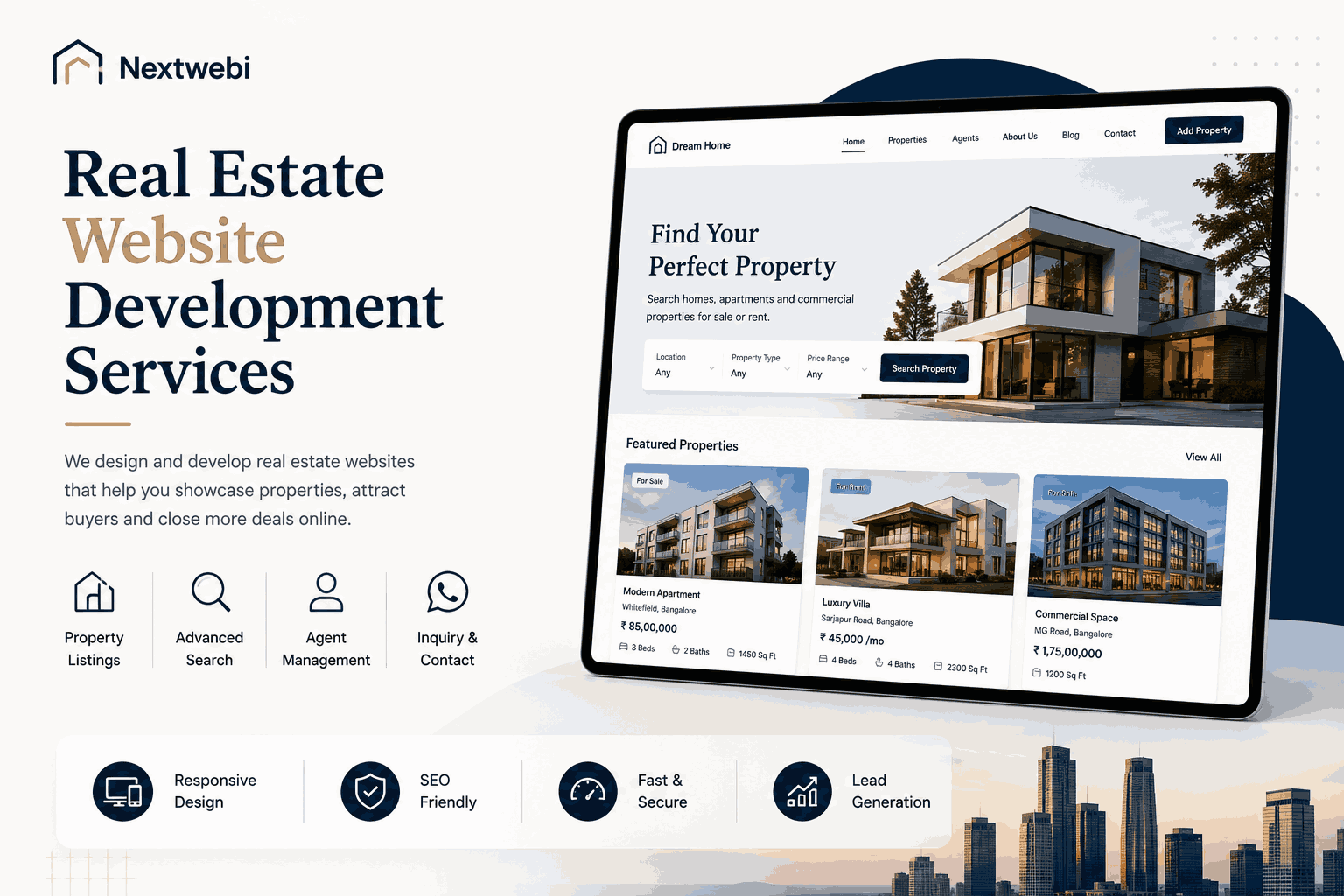
The real estate industry depends heavily on online platforms to showcase properties and connect buyers, sellers, tenants, and agents. People usually search online before visiting a property, so a website needs to provide clear information, useful search options, property images, and simple ways to contact the right person.
Real Estate Website Development Services help real estate businesses create websites that are designed around their properties, customers, and business operations. A professionally developed website can make it easier to manage property listings while giving visitors a convenient way to explore available properties.
Building a Website for Real Estate Businesses
Real estate businesses have different requirements depending on the properties they manage and the customers they serve. A residential property company may focus on homes and apartments, while a commercial business may deal with offices, retail spaces, warehouses, or land.
A professional real estate website development company can create a platform based on these requirements. The website can include property listings, search and filtering, property details, image galleries, location information, inquiry forms, agent profiles, and other useful features.
The structure of the website should make it easy for visitors to move between property categories and find relevant listings without unnecessary steps.
Creating Useful Property Listings
Property information is one of the most important parts of a real estate website. Visitors need enough information to understand a property before deciding whether to contact an agent.
Through effective real estate web page design, each property can have a dedicated page containing photographs, descriptions, pricing, location, property type, size, amenities, specifications, and other relevant details.
Image galleries can allow visitors to view different areas of a property, while location information can help them understand the surrounding area. Contact and inquiry options can be placed where visitors can easily find them.
A well-organized property page can make browsing more convenient and help potential buyers or tenants make informed decisions.
Making Property Search Easier
Real estate websites may contain hundreds or thousands of property listings. Without proper search functionality, visitors may find it difficult to identify properties that match their requirements.
Search and filtering features can allow users to narrow listings based on location, property type, price, number of bedrooms, size, amenities, and other criteria.
A real estate web site design can also include map-based property searches, saved listings, recently viewed properties, and inquiry features depending on the business requirements.
These features can help users spend less time searching through unsuitable listings and focus on properties that meet their needs.
Supporting Agents and Property Managers
A real estate website also needs to support the people who manage the listings. Agents and property managers may need to add new properties, update existing information, change prices, upload images, and remove properties that are no longer available.
An administration dashboard can provide these functions in one place. Different user permissions can also be created for administrators, agents, and property managers.
For businesses that require customized systems and workflows, Custom Software Development Services can support the development of features that connect the website with internal business operations.
Developing Real Estate Portals
A larger property business may require more than a standard company website. A real estate portal development company can create platforms that support multiple property listings, agents, users, and property categories.
A portal can allow agents or property owners to manage their own listings while administrators control the overall platform. Users can search properties, save listings, submit inquiries, and communicate with agents.
A property portal can also support additional business models, such as featured property listings, agent subscriptions, premium listings, or advertising services.
Creating a Website That Can Grow
A real estate business can expand its property portfolio, services, and target locations over time. The website should therefore be flexible enough to support future changes.
New property categories, locations, search filters, user accounts, integrations, and management features can be added as the business grows.
Responsive design is also important because visitors may browse properties using smartphones, tablets, or desktop computers. The website should provide a consistent experience across different devices.
For businesses looking for a technology partner, Nextwebi provides web and software development solutions that can be tailored to different business requirements.
A well-planned real estate website can help businesses present their properties professionally while giving buyers, sellers, and tenants a convenient way to search and connect with real estate professionals.
Frequently Asked Questions
1. What are Real Estate Website Development Services?
Real Estate Website Development Services involve creating websites and property platforms that help real estate businesses showcase listings and connect with buyers, sellers, tenants, and agents.
2. What features can be included in a real estate website?
Common features include property listings, search and filters, image galleries, property details, inquiry forms, agent profiles, location information, and administrative dashboards.
3. Can agents manage their own property listings?
Yes. A custom website can provide agents with individual accounts that allow them to add, edit, and manage their property listings.
4. Can a real estate website include map-based search?
Yes. Map functionality can be integrated to help users explore properties based on their locations.
5. Can a real estate website be expanded later?
Yes. New property categories, locations, features, integrations, user roles, and other functionality can be added as the business grows.