
ICSI Treatment: Procedure, Benefits, and Success Rate
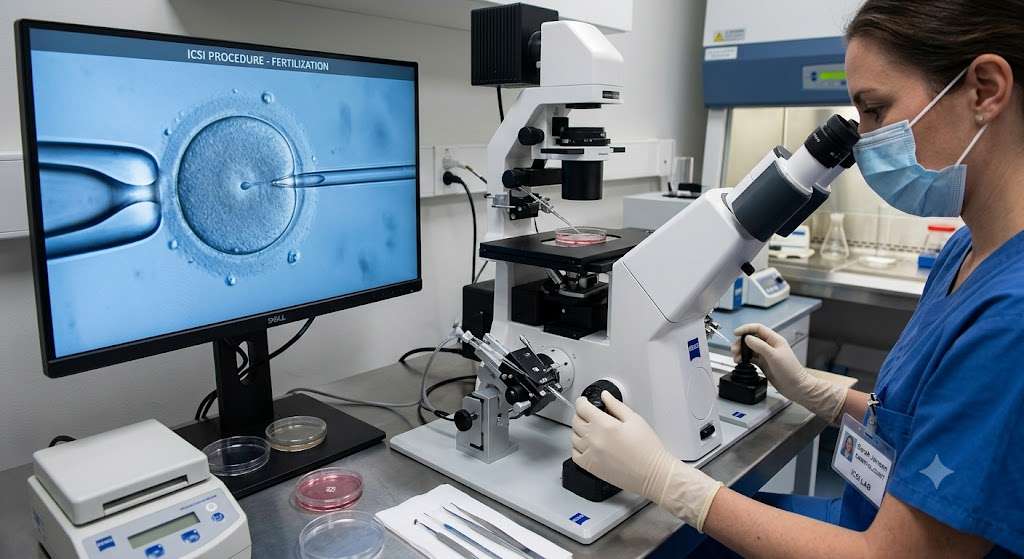
ICSI stands for Intracytoplasmic Sperm Injection, a fertility procedure used in conjunction with In Vitro Fertilization (IVF), which is used to help couples who have trouble getting pregnant. During ICSI, a single sperm is injected directly into the body of a mature egg in the laboratory and is typically used for men with male-factor infertility (low sperm count, poor sperm motility, abnormal sperm shape, or a history of fertilization failure).
The process of treatment with ICSI starts with fertility evaluation, and ovarian stimulation followed by collection of eggs from the ovaries. They are then checked in the lab. A competent, motile sperm is injected into each oocyte by an embryologist. Embryos develop; they are observed, and then an embryo is transferred to the womb.
A key advantage of ICSI treatment is that it may be able to bypass some fertilization issues and may be helpful in cases where you have had a surgical retrieval of your sperm. However, there is no clear estimate of success or childbirth following ICSI. Success rates are influenced by the age, quality of the eggs and sperm, as well as the quality of the resulting embryos.
In case of planning for fertility treatment, you can always visit our fertility specialist for the treatment of ICSI according to your needs.