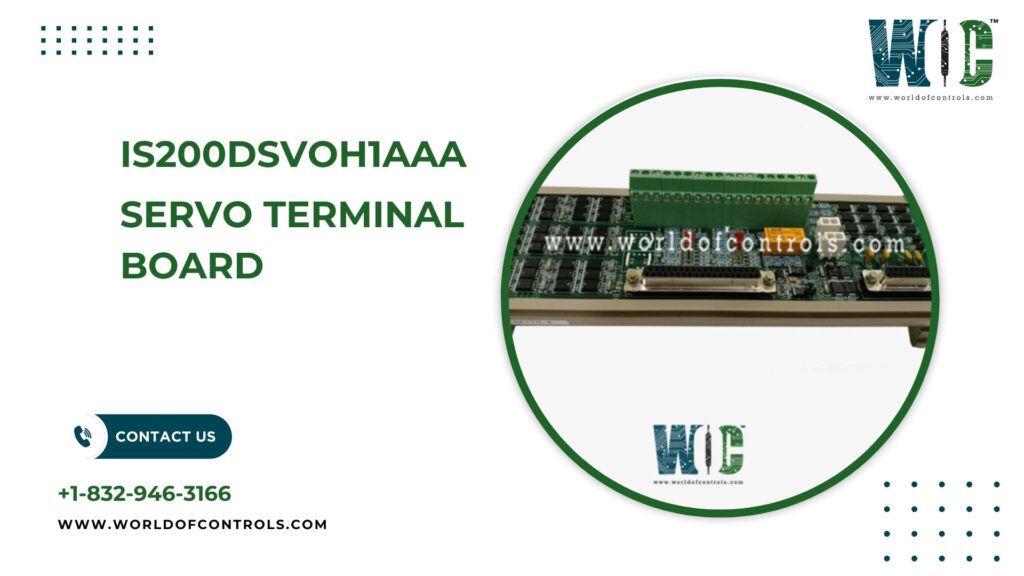
In modern power generation, especially within gas and steam turbine applications, precision control and reliability are non-negotiable. GE’s Mark VI control platform has long been a trusted system for turbine automation, providing robust, scalable, and flexible control solutions. Among its essential hardware components is the servo terminal board, a crucial interface that connects control logic to physical actuator mechanisms. This article explores the role, design, and significance of the servo terminal board in the context of GE Mark VI turbine systems.
What Is the GE Mark VI System?
The GE Mark VI is part of the Speedtronic family of turbine control systems developed by General Electric. It is used globally for controlling and protecting gas and steam turbines in both utility and industrial environments. The system integrates real-time control functions with built-in diagnostics and data logging, ensuring that turbines operate efficiently and safely.
One of the defining features of the Mark VI system is its modular architecture, which uses specialized terminal boards to handle different I/O functions. The servo terminal board is one such component, specifically engineered to manage actuator control.
Role of the Servo Terminal Board
The servo terminal board acts as the intermediary between the control processor and the physical servo mechanisms that adjust turbine components like fuel valves, steam valves, and inlet guide vanes. These mechanical systems require precise, real-time control for smooth turbine operation.
The board’s primary responsibilities include:
- Signal transmission between the controller and the actuator
- Power distribution to servo devices
- Feedback collection from servo mechanisms
- Signal conditioning to reduce electrical noise and ensure accuracy
In essence, this board ensures that control signals are correctly interpreted and that actuator responses are accurately communicated back to the control system.
How It Works in Turbine Applications
In both gas and steam turbines, various moving parts must be adjusted dynamically during operation. For example, a gas turbine must precisely control fuel flow to maintain optimal combustion. The servo terminal board enables this by receiving digital commands from the controller, converting them to analog signals, and transmitting them to the fuel control actuator.
Conversely, the actuator’s position or status is continuously monitored and fed back to the control system, allowing for closed-loop control. This process happens in real-time and must be extremely accurate to prevent performance issues, fuel inefficiencies, or safety hazards.
Features and Benefits
Servo terminal boards are engineered to meet the high standards of the power generation industry. Typical features include:
- Multiple channel support for controlling several actuators simultaneously
- Built-in diagnostics to detect faults or degradation in signal quality
- Noise immunity to prevent false signals or miscommunication in electrically noisy environments
- Modular design for easy replacement and maintenance
These features help ensure high availability and minimal downtime, especially important in base-load power plants where reliability is paramount.
Importance in Maintenance and Troubleshooting
From a maintenance perspective, servo terminal boards simplify the troubleshooting process. Integrated diagnostics can alert operators to issues such as signal loss, actuator faults, or wiring problems. When a failure does occur, the modular nature of the Mark VI system allows for rapid replacement of just the affected board without the need to disassemble larger system components.
Additionally, since the board interfaces directly with field wiring, it serves as a critical checkpoint for verifying both electrical signals and actuator performance.
Conclusion
The servo terminal board is a foundational component within the GE Mark VI turbine control system. By serving as the interface between the digital controller and mechanical actuators, it enables precise, real-time control of key turbine operations. Whether adjusting steam valves or regulating fuel flow, this board ensures that commands are executed accurately and efficiently.
For engineers, operators, and maintenance teams, understanding the role and function of the servo terminal board is essential to maintaining reliable, high-performance turbine systems. As control technologies continue to evolve, this component remains integral to the safe and efficient operation of modern power plants.
Our Products..